

Table of Contents
Introduction: What Does Fintechasia.net Trading Days Really Mean?
The search term fintechasia.net trading days can create some confusion because it sounds as though FintechAsia.net itself is a stock exchange or dedicated brokerage with an official trading calendar. However, current information from the website presents FintechAsia.net primarily as a technology, business, finance, cryptocurrency, and trading information publisher rather than as a clearly identified regulated securities exchange. Its About Us page describes the website as a blog covering technology, business, finance, cryptocurrency, and trading topics.
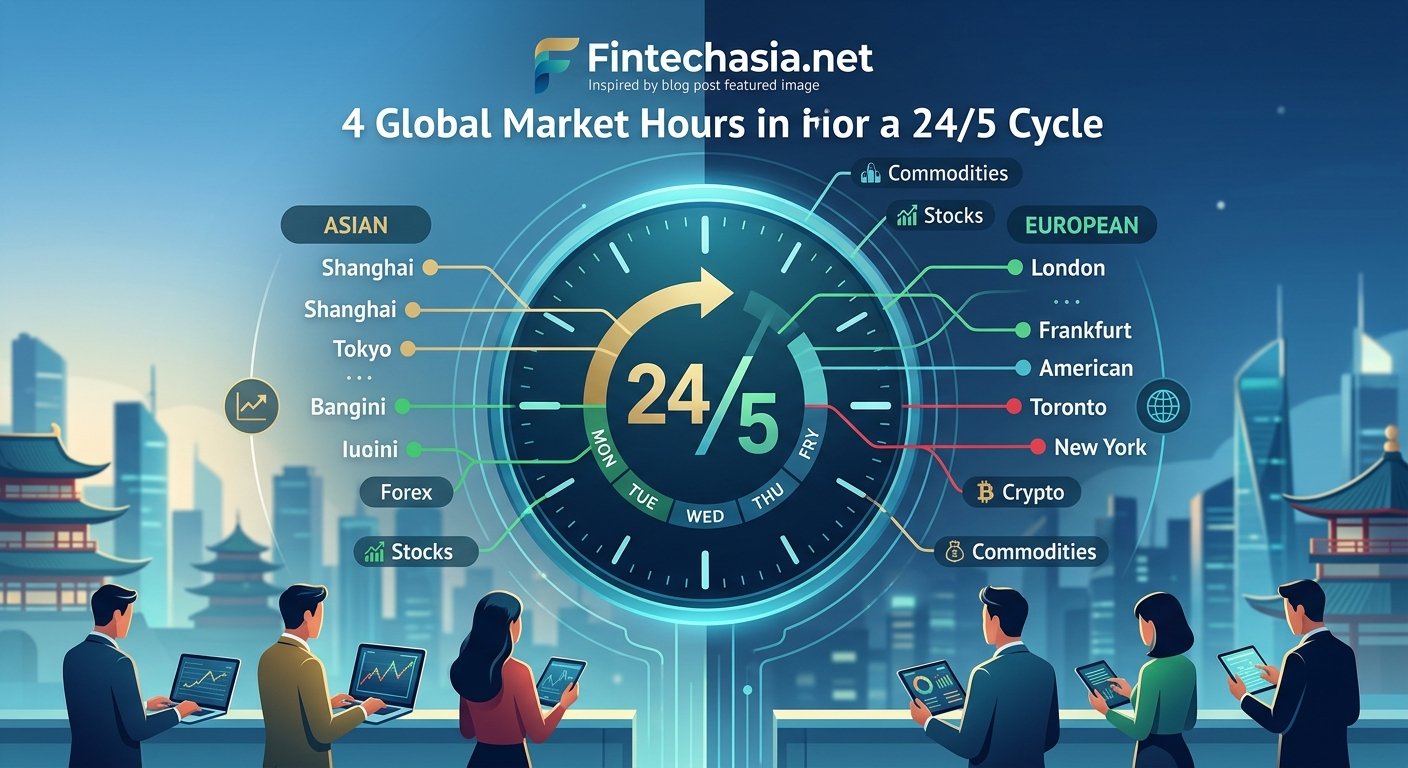
This distinction matters. When someone searches for fintechasia.net trading days, they may actually be looking for information about trading sessions, market opening hours, financial-market activity, or an article published by FintechAsia.net about trading. The website does have an article titled “Fintechasia.net Trading Days: Unlocking Opportunities in the Market,” published on November 9, 2025. That article describes trading activity and discusses a claimed 24/5 operating model.
The important point is that readers should not automatically interpret an article about trading days as proof that FintechAsia.net operates its own exchange. Understanding that difference is the first step toward using financial information responsibly.
What Is FintechAsia.net?
FintechAsia.net positions itself as a digital publication focused on the intersection of finance and technology. Its current website contains sections covering business news, cryptocurrency, finance, and other technology-related subjects. The site’s own description says its writers provide insights and analysis concerning fintech developments, startups, established financial companies, cryptocurrency, and trading.
That makes fintechasia.net trading days an interesting search phrase because it sits between financial education and trading-platform terminology. A reader may encounter content describing market sessions, trading opportunities, technical analysis, or global financial activity without necessarily dealing with a traditional exchange.
The distinction becomes even more important when money is involved. A financial publication can discuss a market without providing direct access to that market. Likewise, an article can explain trading strategies without being a brokerage service.
FintechAsia.net’s homepage currently publishes a mixture of business, finance, cryptocurrency, and technology stories. This confirms that the website operates as a content platform with a broad editorial scope rather than presenting itself simply as one conventional securities exchange.
Fintechasia.net Trading Days and the Meaning of a Trading Day
A trading day generally means a day on which a particular financial market is open for transactions. The exact definition depends on the asset and venue. Stock exchanges normally have defined business days, opening times, closing times, holidays, and sometimes shortened sessions.
Forex markets operate differently. The global foreign-exchange market is commonly associated with activity throughout the business week, while cryptocurrency markets can operate continuously. Futures, commodities, bonds, and derivatives may all have their own schedules.
This is why fintechasia.net trading days should not be treated as a universal calendar for every financial asset. If the underlying asset is listed on a specific exchange, that exchange’s official calendar is the authoritative source for determining whether the market is open.
The FintechAsia article associated with the keyword describes its subject as operating on a 24/5 model and emphasizes the importance of understanding market hours across different regions. However, readers should distinguish between what that article says and independently verified exchange operating information.
Why Market Hours Matter
Market hours affect liquidity, volatility, order execution, and the availability of buyers and sellers. A trader who does not know when a market opens or closes can misunderstand price movements or assume that an order will execute immediately when it may actually wait for the next available session.
For that reason, anyone researching fintechasia.net trading days should think beyond a simple Monday-to-Friday answer. The relevant question is not merely “Which days can I trade?” but also “Which market am I trading, what are its official hours, and which holidays or special sessions apply?”
Fintechasia.net Trading Days: What the Published Article Says

The specific FintechAsia article using the keyword explains trading days in the context of modern global markets. It describes FintechAsia.net as a trading-oriented ecosystem and discusses tools such as charts, analytics, price monitoring, alerts, and market information.
The article also states that its described trading environment follows a 24/5 model, allowing market participants to engage with global activity from Asian markets through European and American sessions.
That information helps explain why the keyword fintechasia.net trading days appears in searches. Nevertheless, it should be approached with appropriate financial caution. The article itself is categorized under “Interesting Facts” and is marked as sponsored content by accessiBe on the site’s page.
For a reader, this means the article can be useful as contextual material, but it should not replace official information from an exchange, broker, regulator, or financial institution when making a real trading decision.
Typical Trading-Day Structure Across Global Markets
Different markets can have very different schedules. The table below illustrates the general idea rather than claiming that these are the official hours of FintechAsia.net itself.
| Market Type | Typical Trading Pattern | Main Consideration |
| Stock exchanges | Weekday sessions | Exchange calendar and public holidays |
| Forex | Generally 24/5 | Regional market sessions and liquidity |
| Cryptocurrency | Often 24/7 | Exchange-specific maintenance and liquidity |
| Futures | Extended sessions | Contract and exchange schedule |
| Bonds | Varies by market | Local holidays and settlement rules |
| Commodities | Extended or scheduled sessions | Contract-specific trading hours |
The significance of fintechasia.net trading days therefore depends heavily on what a searcher actually intends to trade. A person researching Asian stocks needs an exchange calendar. Someone studying forex needs a global session schedule. A cryptocurrency trader needs the operating rules of the particular crypto exchange being used.
Trading Sessions Are More Important Than the Calendar Alone
A trading day can contain periods of very different activity. Market opening periods can bring rapid price discovery as new information is incorporated into prices. Overlapping international sessions can produce greater liquidity because participants from multiple financial centers are active simultaneously.
The FintechAsia article similarly emphasizes the impact of global market movements and economic announcements on trading activity.
This is particularly relevant to anyone researching fintechasia.net trading days because a market being technically open does not mean every hour offers the same conditions.
A Practical Example: Asian Stock-Market Trading Hours
For readers in Asia, it is useful to look at an actual exchange rather than assuming that every financial website has identical trading hours.
Pakistan Stock Exchange, for example, publishes its own official trading schedule. Its current regular-market information shows different arrangements for Monday through Thursday and Friday, with Friday divided into separate sessions. The exchange also publishes separate schedules for negotiated deals, debt securities, and other market segments.
| Session Type | Example of What Must Be Checked |
| Regular equity market | Opening and closing times |
| Friday session | Whether the day is divided into sessions |
| Debt market | Separate trading window |
| Negotiated deals | Different operating hours |
| Special market | Contract or product-specific schedule |
| Holiday | Full closure or modified session |
This example demonstrates why fintechasia.net trading days should not be used as a substitute for an official exchange calendar. If your actual investment concerns Pakistani equities, the Pakistan Stock Exchange’s published schedule is much more relevant than a general article discussing global trading activity.
How Holidays Affect Fintechasia.net Trading Days
Public holidays are another reason trading calendars require careful attention. A market can follow its normal weekly schedule but close completely for a national holiday or operate under reduced hours for a special occasion.
Pakistan Stock Exchange, for instance, publishes an annual holiday calendar that includes national and religious holidays and notes that some dates can be subject to the appearance of the moon. The exchange also reserves the right to modify or vary dates when necessary.
This is an important lesson for anyone searching fintechasia.net trading days. A generic Monday-to-Friday schedule is never enough for serious planning.
The same principle applies internationally. Singapore, Hong Kong, India, Japan, the United States, and European markets all maintain their own calendars. A holiday in one financial center can also influence liquidity in another market without necessarily causing that second market to close.
Why Holiday Liquidity Can Be Different
Even when an exchange remains open, participation can be lower around major holidays. Lower participation can sometimes produce wider spreads, reduced liquidity, or unusual price behavior.
Traders should therefore distinguish between market availability and market quality. A market being open does not automatically mean conditions are ideal for entering a position.
Fintechasia.net Trading Days and Global Market Sessions
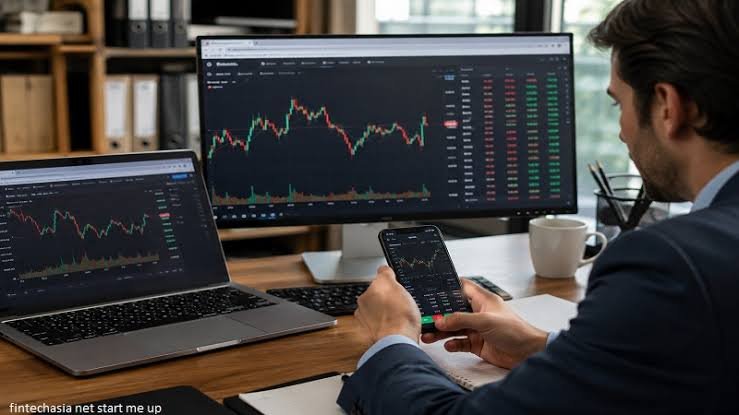
Global financial markets are interconnected. Asian markets can respond to developments in Europe and the United States, while American markets can react to overnight news from Asia.
This creates a chain of activity that continues as financial centers open and close. In forex and certain derivatives markets, this global sequence is especially important because participants may trade during multiple regional sessions.
When evaluating fintechasia.net trading days, this global perspective is useful. Instead of thinking about a trading day as a fixed block of hours, it can be more productive to understand how liquidity moves between financial centers.
| Global Region | Market Influence | Typical Trading Consideration |
| Asia-Pacific | Asian equities, currencies, commodities | Regional economic news |
| Europe | European equities, currencies, bonds | European economic releases |
| North America | U.S. equities, bonds, currencies | U.S. economic and corporate news |
| Session overlap | Increased cross-market participation | Potentially higher liquidity and volatility |
The exact conditions depend on the instrument, exchange, broker, and time zone. Daylight-saving changes can also alter the apparent relationship between market hours.
Why High-Volume Trading Days Attract Attention
High-volume sessions can be attractive to experienced traders because more participants are active and price discovery can become faster. The FintechAsia article specifically discusses high-volume trading days and recommends paying attention to profit targets, stop-loss orders, and execution speed.
However, higher volume should never be confused with guaranteed profitability.
When many participants react to the same economic announcement, prices can move sharply in both directions. A trader who enters without understanding the underlying risk can experience losses just as quickly as potential gains.
For readers researching fintechasia.net trading days, this is one of the most important concepts to understand. The best trading day is not necessarily the day with the biggest price movement. It is the day and market environment that fit a trader’s strategy, risk tolerance, liquidity requirements, and available information.
Technical and Fundamental Analysis During Trading Sessions
The FintechAsia article recommends combining technical and fundamental analysis when approaching trading decisions. It mentions tools such as trend lines, candlestick patterns, and volume indicators as ways traders can study market behavior.
Technical analysis focuses primarily on price and market data. Traders may study support and resistance, momentum, volatility, volume, and historical patterns.
Fundamental analysis takes a different approach. It considers economic indicators, company results, interest rates, inflation, monetary policy, geopolitical events, and other factors that can influence asset valuations.
Neither approach guarantees successful trades. The value of studying them is that they encourage traders to make decisions based on a defined framework instead of reacting emotionally to every price movement.
My Opinion on Fintechasia.net Trading Days
In my opinion, the biggest mistake people can make with the keyword fintechasia.net trading days is assuming that the phrase automatically refers to an official exchange calendar. The available evidence suggests a more nuanced interpretation.
FintechAsia.net is clearly an active finance and technology publication, and it has published material specifically discussing trading days, market sessions, and trading strategies. At the same time, I would not use a FintechAsia article alone to determine whether a particular securities market is open or whether a particular trading service is regulated.
For real investment decisions, I would verify the relevant exchange, broker, regulator, or financial institution directly. That extra step takes only a few minutes but can prevent a surprisingly expensive misunderstanding.
I also think readers should be cautious with language that makes trading sound effortless. Markets are uncertain. Charts, alerts, analytics, and market commentary can improve preparation, but none can eliminate financial risk.
How to Verify Trading Days Before Making a Trade
If you arrive at FintechAsia.net while researching fintechasia.net trading days, the safest approach is to use the article as background information and then identify the actual market associated with your intended trade.
Suppose you want to trade a listed stock. Find the exchange on which the stock is listed and check its official calendar. If you want to trade a currency pair, identify the trading service and confirm its published session hours. If you are trading cryptocurrency, check the individual exchange because cryptocurrency platforms can have different maintenance procedures and rules.
Time zones should also be confirmed carefully. A schedule displayed in New York time can look completely different to someone trading from Pakistan, India, Singapore, or Australia.
Finally, check for special closures. Holidays, technical maintenance, emergency market decisions, and shortened sessions can all change normal expectations.
Fintechasia.net Trading Days and Risk Management
Trading schedules are only one part of responsible market participation. Risk management is arguably more important.
A trader should know how much capital is at risk before opening a position. Position size should reflect the trader’s financial circumstances and strategy rather than being determined by excitement during a volatile session.
Stop-loss orders can be useful in some strategies, although they do not guarantee execution at the exact desired price during fast-moving or illiquid conditions. Traders should also understand leverage because leverage can increase both potential gains and potential losses.
The broader lesson behind fintechasia.net trading days is that timing should support a trading plan, not replace one.
A market may be open for several hours, but that does not mean an investor needs to participate throughout the entire session. Selectivity can be more valuable than constant activity.
Is FintechAsia.net a Trading Platform or a Financial Information Website?
This is one of the most important questions surrounding the keyword.
FintechAsia.net’s own About Us page describes it as a blog covering technology, business, finance, fintech, cryptocurrency, and trading topics. Its homepage likewise presents a stream of articles across these categories.
The specific fintechasia.net trading days article uses language describing a trading platform and a 24/5 model, but readers should not automatically treat those descriptions as independently verified evidence of a regulated brokerage or exchange.
This distinction is particularly important because financial websites can contain educational, promotional, sponsored, or third-party material. Readers should always establish who actually provides the financial service before depositing funds or submitting sensitive information.
What Traders Should Look for in a Financial Service
When moving from research to actual trading, trust should come before convenience. A professional-looking interface is not enough to establish that a financial service is legitimate.
Regulatory status, corporate identity, transparent fees, withdrawal conditions, risk disclosures, customer-support information, and clear terms of service are all important considerations.
FintechAsia.net itself publishes terms and conditions governing use of its website, and those terms identify the service as a website rather than establishing the site as a stock exchange.
That is another reason fintechasia.net trading days should be interpreted carefully. Researching a website and trading through a regulated financial institution are two different activities.
Fintechasia.net Trading Days: A Simple Way to Think About the Keyword

The easiest way to understand fintechasia.net trading days is to divide the concept into three separate ideas: FintechAsia.net as an information source, trading days as a market-schedule concept, and individual exchanges or brokers as the places where actual transactions occur.
This approach removes much of the confusion surrounding the search term.
FintechAsia.net can provide articles and commentary about finance and trading. Trading days describe when a market is available. The actual trading venue determines the official schedule, rules, fees, order types, and market access.
Once those three concepts are separated, the subject becomes much easier to understand.
Frequently Asked Questions About Fintechasia.net Trading Days
What are fintechasia.net trading days?
Fintechasia.net trading days is a search phrase associated with FintechAsia.net’s published article discussing trading activity, market sessions, and global financial markets. The website describes itself primarily as a finance, technology, business, cryptocurrency, and trading information publisher.
Does FintechAsia.net have an official stock-exchange trading calendar?
There is no clear evidence on the current FintechAsia.net site establishing it as a stock exchange with its own independently regulated exchange calendar. Its About Us page identifies the site as a blog covering finance, technology, fintech, cryptocurrency, and trading. For official trading dates, investors should consult the relevant exchange or financial institution.
Does FintechAsia.net describe trading as 24/5?
Yes. The specific article associated with fintechasia.net trading days states that the described platform operates on a 24/5 model and discusses global participation across Asian, European, and American markets. However, this statement should not be treated as a substitute for independently verified operating hours for a particular broker, exchange, or financial product.
Why do trading days and market sessions matter?
Trading days determine when transactions can occur, while market sessions influence liquidity, volatility, and the amount of market participation. Holidays and shortened sessions can also change normal schedules. For that reason, traders should check the official calendar of the market where the asset is actually traded.
Is FintechAsia.net suitable as the only source for a trading decision?
No. FintechAsia.net can be useful for general financial and fintech information, but investors should verify important trading details through authoritative sources such as the relevant exchange, broker, regulator, or financial institution. Market commentary should support research rather than replace independent due diligence.
Conclusion: Understanding Fintechasia.net Trading Days the Right Way
The phrase fintechasia.net trading days looks straightforward, but it requires a little context. FintechAsia.net is an active publication covering fintech, finance, business, cryptocurrency, technology, and trading topics. Its November 2025 article specifically discusses trading days, global market sessions, trading tools, and a claimed 24/5 model.
The crucial takeaway is that a website discussing trading is not necessarily the same thing as an exchange operating a financial market. Official trading dates and hours ultimately depend on the actual market, exchange, broker, or financial product involved.
For investors and traders, the smartest approach is therefore simple: use financial articles to understand concepts, then verify operational details through authoritative sources before placing a trade.
In the end, fintechasia.net trading days is best understood as a topic connecting FintechAsia.net’s trading-related content with the broader question of when and how global financial markets operate. Understanding that distinction can help readers search more effectively, interpret financial content more accurately, and make better-informed decisions in an increasingly digital financial environment and more.
